
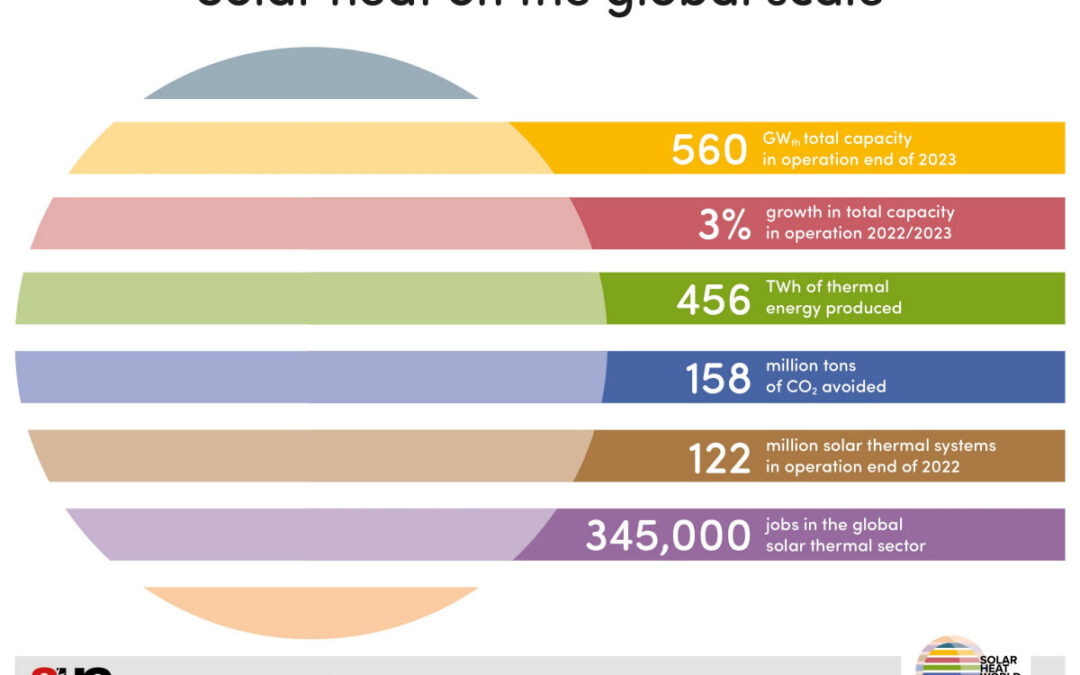
The recently published Solar Heat Worldwide 2024 report by the International Energy Agency (IEA) offers compelling insights into the global adoption of solar thermal technologies. This annual report highlights the growing importance of solar heat in the transition towards sustainable energy solutions, particularly for industrial companies and large thermal users. In this blog, we will delve into some relevant statistics from the report and discuss why now is the perfect time for your business to join the trend of decarbonising industrial processes with solar heat.
Key Statistics from the Solar Heat Worldwide Report
1. Global Capacity Growth: The report indicates a substantial increase in the global capacity of solar thermal systems. By the end of 2022, the worldwide capacity of solar thermal installations reached over 500 GWth (gigawatts thermal), marking a significant milestone. This growth reflects the increasing adoption of solar thermal technologies across various sectors, including industrial applications.
2. Industrial Applications on the Rise: One of the most notable trends in the report is the rising use of solar thermal systems in industrial applications. In 2022, solar heat for industrial processes (SHIP) accounted for a significant portion of new installations. The report highlights that industries such as food and beverage, textile, and chemical processing are increasingly integrating solar thermal technologies to meet their high thermal energy demands sustainably.
3. Cost-Effectiveness and Efficiency: The report emphasizes the cost-effectiveness and efficiency of solar thermal systems. Advances in technology and economies of scale have reduced the cost of solar thermal installations, making them more accessible for industrial companies. Moreover, the efficiency of these systems has improved, offering reliable and consistent thermal energy, which is crucial for industrial processes.
4. Environmental Impact: The environmental benefits of solar thermal technologies are significant. The report estimates that solar thermal installations worldwide have avoided approximately 57.5 million tons of CO2 emissions annually. For industrial companies, this translates to a substantial reduction in carbon footprints, aligning with global sustainability goals and regulatory requirements.
5. Market Potential: The report identifies significant market potential for solar thermal technologies, particularly in regions with high solar irradiance. Countries like China, India, and Brazil are leading the way in solar thermal adoption, but there is considerable untapped potential in other regions as well. Industrial companies in these regions can benefit from favorable conditions and incentives to adopt solar thermal solutions.
Why Industrial Companies Should Join the Solar Heat Trend
1. Sustainable and Cost-Effective Energy: Adopting solar thermal technologies provides industrial companies with a sustainable and cost-effective source of thermal energy. With rising energy costs and increasing pressure to reduce carbon emissions, solar heat offers a reliable and economical solution to meet high thermal energy demands.
2. Enhanced Energy Security: Solar thermal systems enhance energy security by reducing dependence on fossil fuels and mitigating the impact of volatile energy prices. By generating thermal energy on-site, industrial companies can achieve greater control over their energy supply and costs.
3. Regulatory Compliance and Competitive Advantage: Governments worldwide are implementing stricter regulations to curb carbon emissions. Adopting solar thermal technologies helps industrial companies comply with these regulations and avoid potential penalties. Additionally, demonstrating a commitment to sustainability can enhance a company’s reputation and provide a competitive advantage in the market.
4. Technological Advancements: The solar thermal industry is experiencing continuous technological advancements, improving the efficiency and reliability of systems. By adopting solar heat solutions, industrial companies can leverage the latest innovations to optimize their processes and reduce operational costs.
5. Positive Environmental Impact: By integrating solar thermal technologies, industrial companies can significantly reduce their carbon footprints and contribute to global efforts to combat climate change. This not only benefits the environment but also aligns with the sustainability goals of many organizations and stakeholders.
How Thermodemand Can Help
At Thermodemand, we specialize in providing tailored solar thermal solutions for industrial applications. Our comprehensive services include Project Development, Techno-economic Feasibility Studies, Project Management, and Technical Trainings to ensure successful implementation and optimization of solar thermal systems. We leverage our expertise to help industrial companies transition to sustainable energy sources, reduce operational costs, and achieve their decarbonisation goals. Join the growing trend of industrial decarbonisation with solar heat.
Contact us today to learn how Thermodemand can support your journey towards a more sustainable and efficient future.